Share What I've Learned
Books and articles that turn years of field experience into guidance you can use on your next study.
Temperature mapping · Validation · Education
Hi, I'm Nathan Roman. I help life-science and healthcare teams get temperature mapping and validation right. I do it through practical education, field-tested tools, and my new book, Six Steps to Effective Temperature Mapping.

About Nathan
Nathan Roman has worked in health and life sciences since 2001. He started out setting sensors on the floor and went on to lead qualification programs across laboratories, manufacturing facilities and controlled environments.
He is a contributing author to the ISPE Good Practice Guide: Controlled Temperature Chambers. He writes, teaches and builds practical tools so quality and operations teams can plan with confidence. As a Principal Consultant at Validation Management Solutions, he carries that approach into execution for organizations that need the work done.
Nathan Roman has worked in the health and life sciences industry since 2001. He started where most qualification programs quietly succeed or fail: on the floor, setting sensors, executing studies, and explaining results to people who needed them to make decisions.
Early on he learned something that shaped the rest of his career. Guidance is not enough. In regulated environments, temperature mapping decisions get questioned. Sensor placement. Study duration. Acceptance criteria. Challenge conditions. The work has to be explainable. It has to be defensible. It has to hold up under pressure.
Over the years Nathan moved from executing individual studies to leading complex qualification and validation efforts across laboratories, manufacturing facilities, and controlled environments. He has supported organizations building programs from the ground up, and large organizations managing scale, scrutiny, and change. Across that spectrum his focus has stayed consistent: apply the right level of rigor to protect product quality and patient safety, without creating unnecessary burden.
His work emphasizes risk-based thinking, clear rationale, and lifecycle alignment. He advocates for qualification strategies that can be explained, defended, and sustained over time under GCP, GLP, and GMP expectations.
Nathan is a contributing author to the ISPE Good Practice Guide: Controlled Temperature Chambers, and the author of Six Steps to Effective Temperature Mapping. He shares practical lessons from the field with validation, quality, and engineering professionals who want compliance that holds up.
My Book
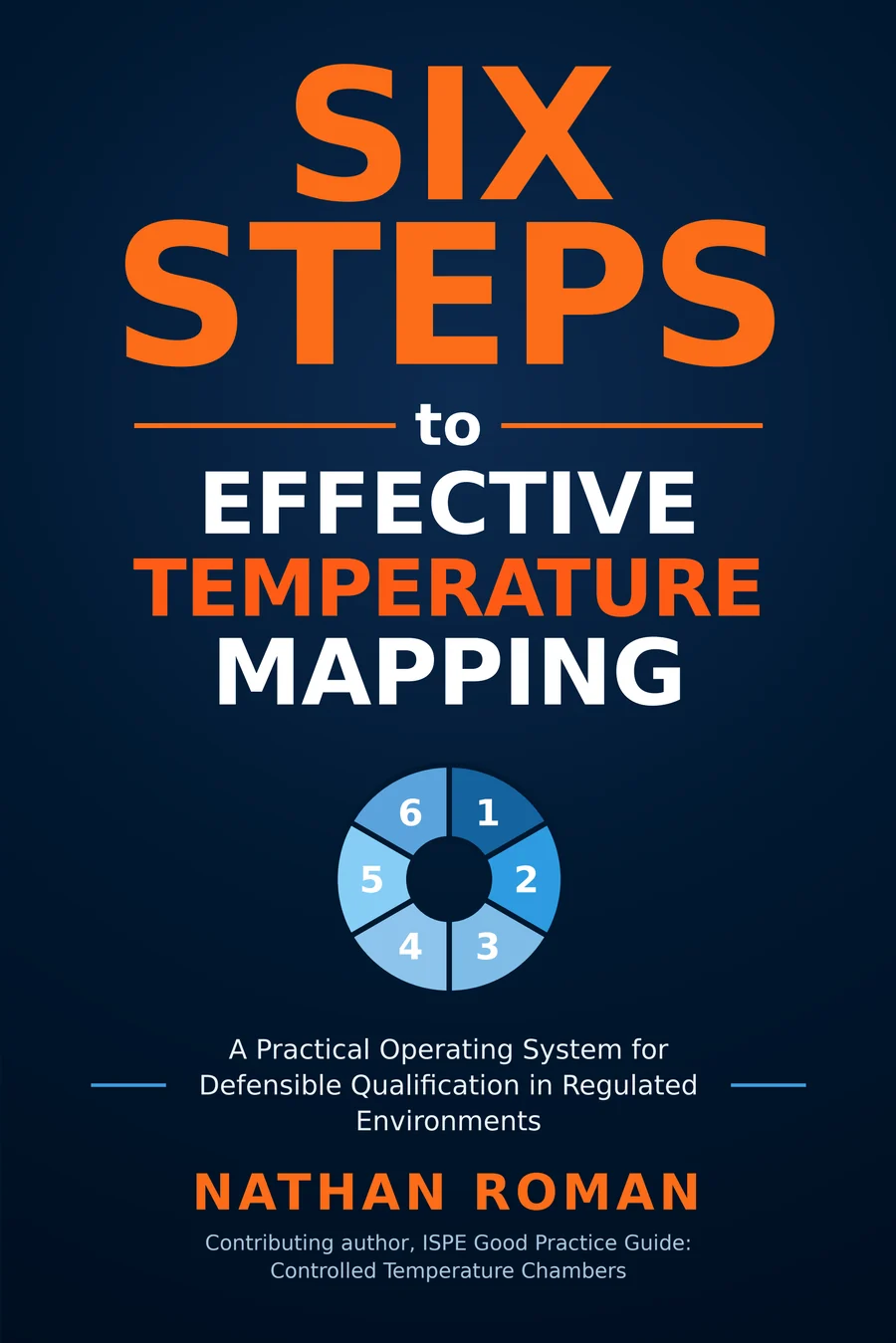
A Practical Operating System for Defensible Qualification in Regulated Environments
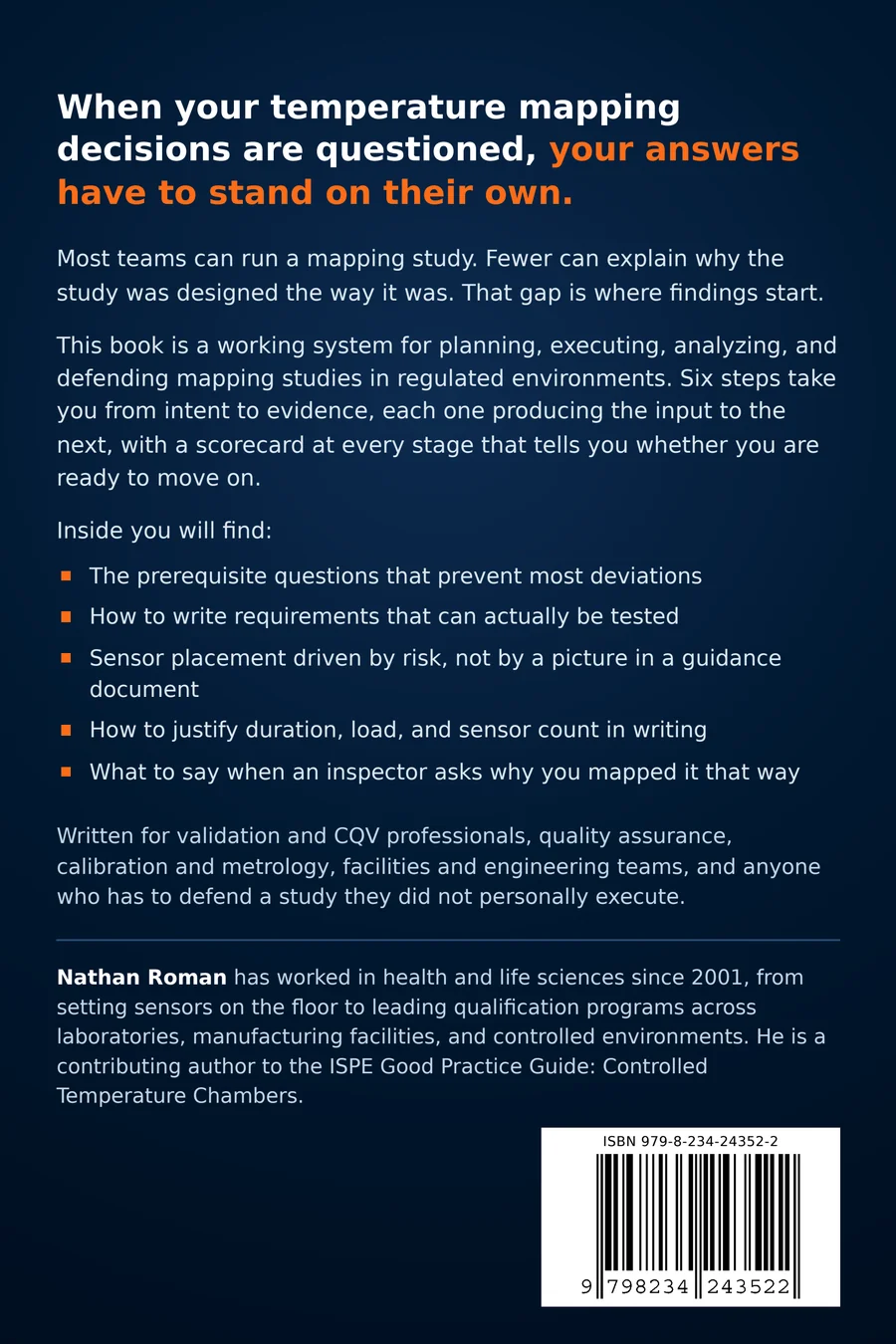
When your temperature mapping decisions are questioned, your answers have to stand on their own.
Most teams can run a mapping study. Fewer can explain why the study was designed the way it was. That gap is where findings start.
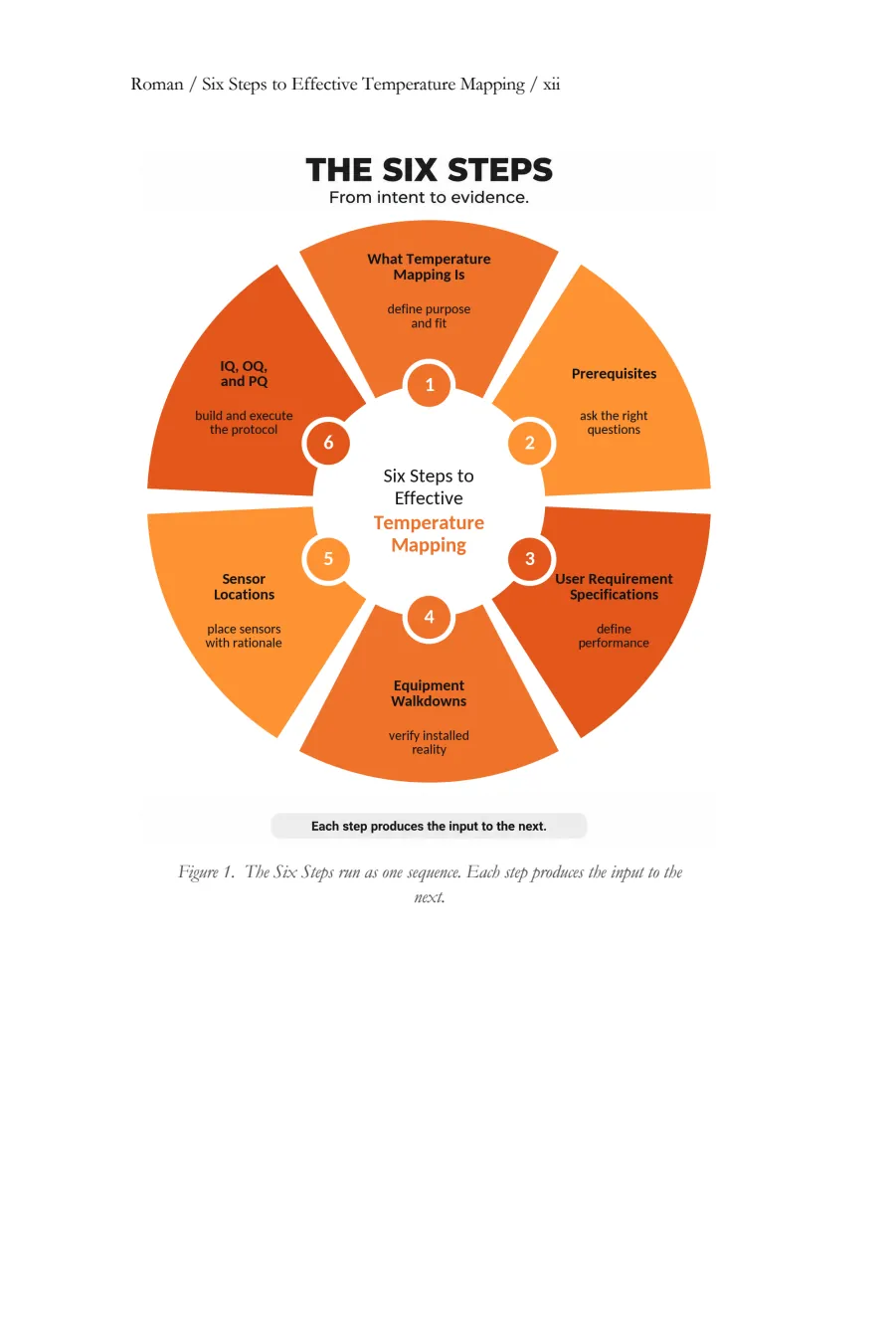
This book is a working system for planning, executing, analyzing and defending mapping studies in regulated environments. Six steps take you from intent to evidence. Each step produces the input to the next, with a scorecard at every stage that tells you whether you are ready to move on.
Written for validation and CQV professionals, quality assurance, calibration and metrology, facilities and engineering teams, and anyone who has to defend a study they did not personally execute.
Hardcover available on Lulu. ISBN 979-8-234-24352-2
Look Inside
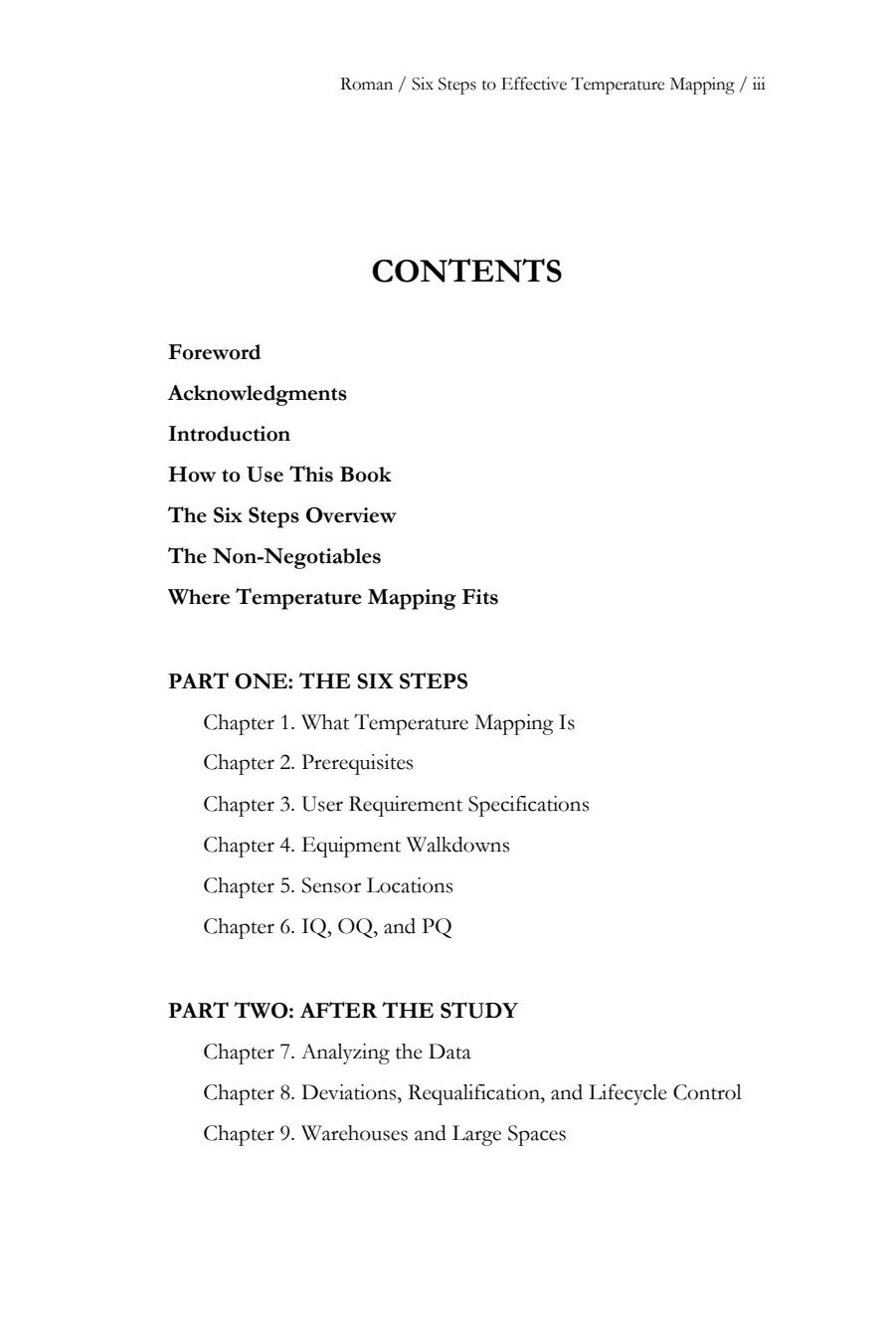
Ten pages from the book. Click a page, swipe, or use the arrow keys to turn them.
When your temperature mapping decisions are questioned, your answers have to stand on their own.
Written for validation and CQV professionals, quality assurance, calibration and metrology, facilities and engineering teams.
Front cover
Education
The Six Steps are the sequence I use to plan and execute mapping work that stands up under scrutiny. Each step produces an output that becomes the input to the next.
Temperature mapping verifies that a chamber can maintain required conditions throughout the usable space, under defined operating conditions.
Clarity before execution prevents rework later. Prerequisites connect mapping work to documented intent.
Requirements define what must be controlled. Mapping verifies those requirements.
Seeing the equipment before execution prevents avoidable deviations.
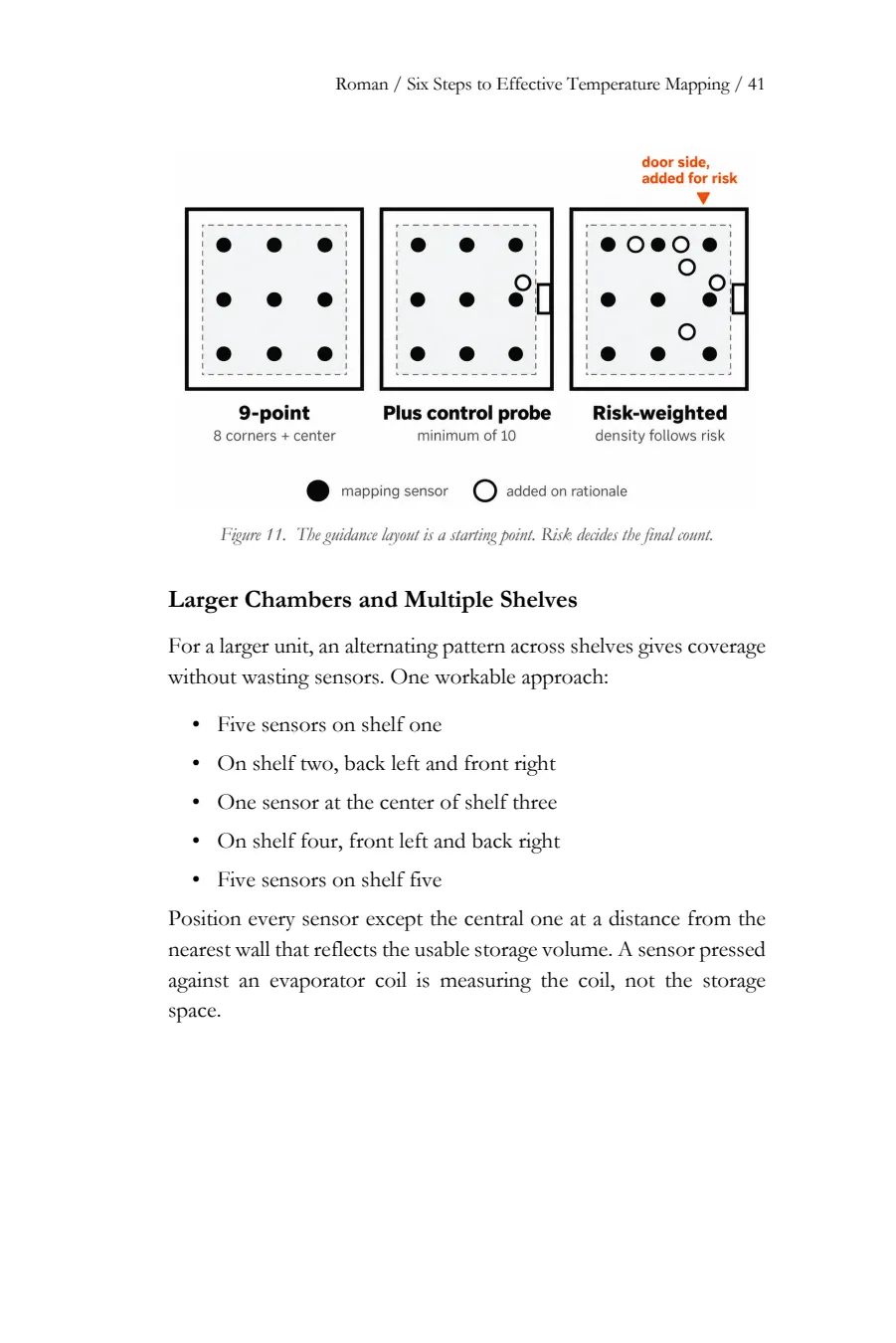
Sensors are placed to challenge assumptions and verify worst-case locations. Count and layout follow from risk, design, and intended use.
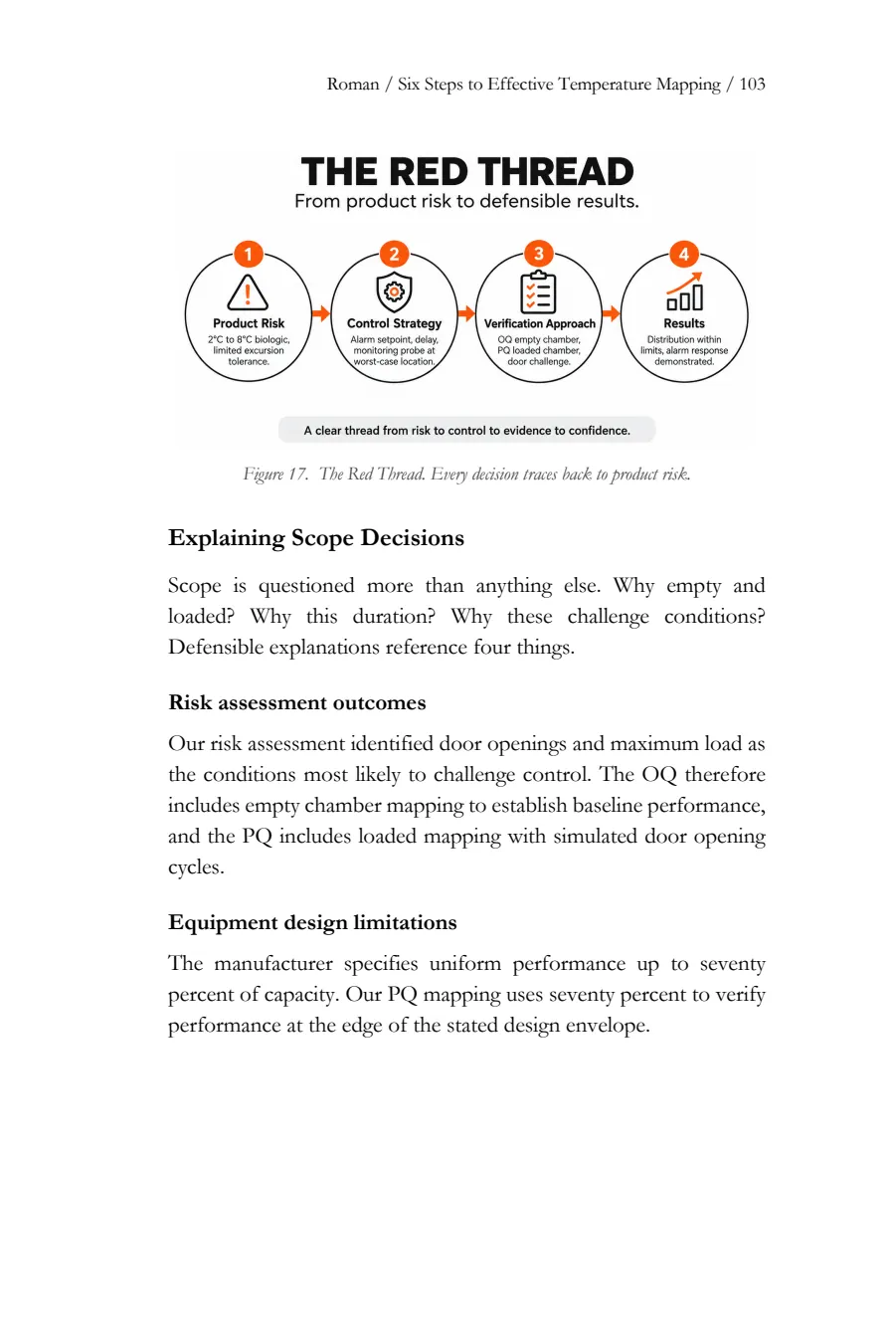
IQ confirms installation and documentation. OQ verifies performance under defined conditions, usually empty. PQ verifies performance under routine use, loaded.
How I Provide Value
Books and articles that turn years of field experience into guidance you can use on your next study.
Templates, checklists and frameworks that cut planning time and reduce documentation gaps.
Talks and training that help teams understand the reasons behind the requirements, not only the requirements.
When you need hands-on delivery, Validation Management Solutions brings the same approach to your site.
Articles & Resources
Speaking & Education
Nathan speaks to quality, validation, engineering and operations audiences in plain language, with real examples from the field.
Send a speaking inquiryValidation Management Solutions
When your organization needs the work done, Validation Management Solutions delivers it. That includes commissioning, qualification and validation (CQV), temperature mapping, calibration, and compliance support.